Mushroom House Cross Stitch
A Whimsical, Compact Charm—Perfect for Thoughtful Handmade Goods
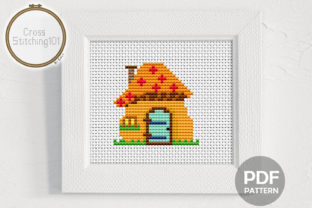
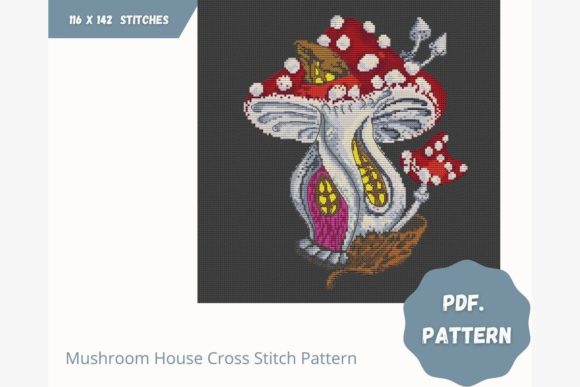
First glance at the Mushroom House Cross Stitch pattern? It’s instantly warm—like a quiet forest clearing at dawn. The rounded cap, tiny windows, and subtle stem give it a storybook softness without tipping into cutesy overload. At 116 x 142 stitches on 16-count black Aida, it lands at just under 9 inches tall—compact enough for a baby onesie pocket or a tea towel corner, yet detailed enough to hold visual weight on a tote bag front or pillow cover. This isn’t a background filler; it’s a gentle focal point.
How It Performs in Real Projects (Not Just PDFs)
I tested the Mushroom House Cross Stitch as the centerpiece for a custom linen apron—intended for a local herbalist’s boutique. On natural unbleached linen with DMC floss, the black Aida base translated beautifully: the contrast made each stitch legible, and the shape held its charm even when worked slightly off-grain (a common issue with hand-stitched fabric). No crowding, no awkward gaps—it breathes.
For small business use, it shines in three areas: personalized gifts, niche boutique merchandise, and digital product bundles. Think embroidered baby bibs with “My First Forage” stitched beneath it—or a set of four kitchen towels, each with a different mushroom variant (this one included). Etsy sellers will appreciate how cleanly it scales down: shrink the hoop size to 4" and it still reads clearly. As a cross stitch pattern, it avoids the pitfalls of dense fill stitches or micro-detail that machine embroidery files often struggle with—no satin stitch frustration, no stabilizer overkill.
Where It Fits—and Where to Pause
The Mushroom House Cross Stitch works best on stable, medium-weight fabrics: cotton twill for patches, midweight linen for pillow covers, or tightly woven cotton for tea towels. Avoid it on highly textured weaves (like bouclé) or stretchy knits—those distort the grid and blur the clean outline. On dark fabric? Perfect—especially since it’s designed for black Aida. But if you’re adapting it to white or cream fabric, double-check thread color contrast: some muted greens or browns may fade visually without testing first.
It’s not ideal for curved surfaces like baseball caps—the shape relies on a flat, gridded foundation. And while it’s lovely on sweatshirts, skip it for ultra-thin jersey tees unless you reinforce heavily. Also, avoid placing it near high-friction zones (like tote bag handles or apron ties) where repeated washing could stress the outer edges. The stitch density is moderate—not sparse, not overwhelming—so it holds up well, but it’s not built for industrial laundering cycles without proper finishing.
What It Adds to Your Product—Beyond Stitches
This design quietly lifts perceived value. Customers notice craftsmanship in clarity—not just cuteness. When used on a handmade product, the Mushroom House Cross Stitch signals intention: this wasn’t slapped on; it was chosen, counted, and placed with care. That builds trust, especially for personalized gifts or wedding-related items (think “Foraged & Loved” on a guestbook cover).
For craft businesses, it supports brand consistency without demanding a full logo system. Its earthy, grounded whimsy pairs naturally with botanical, cottagecore, or slow-living aesthetics—ideal for shops selling herbal goods, ceramic mugs, or wool dryer balls. And unlike generic floral motifs, it stands out in search results and social previews: distinct, ownable, and easy to describe in an Etsy title or printable mockup caption.
Practical Designer Notes Before You Stitch
- Test first—run a small section on scrap fabric matching your final substrate. Check how thread colors land in natural light vs. overhead bulbs.
- Review stitch density—this pattern doesn’t pack in tiny details, but confirm all symbols translate cleanly in your PDF viewer before printing.
- Confirm hoop fit—at 7.25 x 8.88 inches, it fits comfortably in a 9" hoop, but if you’re stitching on-the-go, consider dividing the pattern per the included segmented layout.
- Inspect corners and windows—the roofline and door are simple, but miscounted stitches here break the silhouette. A quick black-and-white printout helps spot alignment issues.
- Check licensing—this is a graphics-type digital embroidery file. If you plan to sell finished items (like embroidered patches or sweatshirts), verify whether the pattern license permits commercial use. Don’t assume.
- Stabilize smartly—black Aida is forgiving, but for non-Aida projects (linen, twill), use tear-away + light cut-away combo. Skip heavy fusible—it dulls the crispness.
Final Thought: A Quiet Workhorse, Not a Flashy Gimmick
The Mushroom House Cross Stitch won’t go viral—but it will sell steadily. It’s the kind of design that earns repeat customers: the same person who buys your embroidered tea towel today orders a matching baby blanket next month. It’s adaptable without being generic, charming without being childish, and detailed without being exhausting. In a crowded market of cross stitch patterns, it earns its place by doing one thing exceptionally well: inviting the stitcher—and the recipient—into a small, peaceful moment. That’s not just embroidery. That’s intention, stitched.