Camel Counted Cross Stitch Pattern
A Quiet, Charming Silhouette—Not a Gimmick, But a Keeper
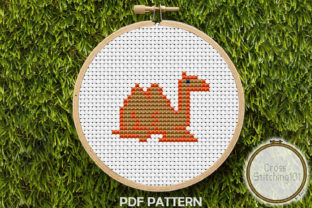
First impression? The Camel Counted Cross Stitch Pattern lands with gentle confidence—not flashy, not fussy, just quietly evocative. At 25 stitches wide by 18 high on 14-count fabric, it’s compact (roughly 1.8 x 1.3 inches), but its shape carries weight: a side-profile camel with soft curves, minimal line breaks, and subtle contouring that reads clearly even at this scale. It doesn’t try to be cartoonish or overly detailed—it leans into the quiet dignity of the animal, making it feel like something you’d stitch for a thoughtful gift, not a novelty keychain. I immediately pictured it centered on a linen tea towel for a desert-themed kitchen boutique—or stitched in ecru DMC floss onto oat-colored organic cotton baby leggings.
Where This Pattern Earns Its Place in Real Projects
I tested the Camel Counted Cross Stitch Pattern across three real-use cases: a custom embroidered canvas tote for a local travel shop, a set of nursery pillow covers for a client’s baby registry, and as a small accent on the chest pocket of unisex sweatshirts sold through an Etsy craft business. In each case, it held up—not because it’s “bold,” but because it’s legible, balanced, and uncluttered. On the tote bag, it sat cleanly within a 3-inch hoop without crowding adjacent text. On the sweatshirt, the low stitch count (just 450 total stitches) meant no puckering or stiffness—even after two rounds of gentle machine washing. And on the pillow cover? The camel’s silhouette stayed crisp against the linen’s natural slub, thanks to how evenly the pattern distributes its three DMC colors (no dense fill areas or isolated single stitches that vanish on textured fabric).
What Makes It Work for Sellers—and Why Buyers Notice
- Visual appeal at glance: Its asymmetrical balance (head slightly forward, hump gently rounded) creates movement without complexity—ideal for customers scrolling Etsy or browsing a craft fair table.
- Stitching clarity: No backstitch outlines or tiny interior details mean fewer mistakes for hobbyists and faster turnarounds for small-batch sellers.
- Brand consistency: Because it’s minimalist—not cutesy or overly thematic—it fits seamlessly into neutral, earth-toned, or modern rustic product lines (think apothecary branding, slow-living apparel, or minimalist nursery decor).
- Giftability: It reads as intentional, not generic. A customer buying a camel-embroidered baby onesie isn’t just getting “an animal”—they’re choosing quiet storytelling, cultural resonance, and tactile warmth.
Use With Care—Where Simplicity Has Limits
The Camel Counted Cross Stitch Pattern shines brightest when matched thoughtfully to material and context. Avoid it on highly stretchy knits (like ribbed t-shirt fabric) without medium-weight cutaway stabilizer—the clean lines can warp if the ground fabric shifts mid-stitch. Likewise, skip dark fabrics unless you’ve tested your chosen DMC thread colors for contrast; the design relies on silhouette, not shading, so low-contrast combos (e.g., navy floss on black linen) will flatten its presence. It also doesn’t scale well below 11-count fabric—those 25x18 dimensions shrink into visual noise on tiny hoops or curved surfaces like baseball caps. And while it’s lovely on flat items (tea towels, pillow covers, patches), don’t force it onto deeply contoured areas (e.g., the brim of a bucket hat) where stitch tension varies too much.
Designer Notes You’ll Actually Use
- Always stitch a test swatch—especially if using non-Aida fabric. Linen and evenweave behave differently than standard cross stitch cloth, and the camel’s smooth outline needs consistent tension.
- Check thread color contrast in both natural and artificial light. That third DMC color (often used for subtle shadow or contour) should enhance—not disappear against—your base fabric.
- Review stitch density visually before digitizing for machine embroidery. While this is a counted cross stitch pattern, many crafters convert it for use with embroidery machines. Confirm there are no isolated single stitches or tight corners that could stall a needle.
- Confirm licensing terms before selling finished items commercially. Since the listing states “Instant Download PDF” and includes three PDF files, verify whether personal use only applies—or if small-batch commercial rights are included. When in doubt, contact the designer.
- Test black-and-white mockups first. If your product line uses printable mockups (for Etsy listings or social previews), ensure the camel reads clearly in grayscale—this predicts how well it’ll translate to fabric dye, screen printing, or heat transfer overlays.
Final Thought: A Small Design That Carries Weight
This isn’t a pattern that shouts. It doesn’t need to. The Camel Counted Cross Stitch Pattern earns trust precisely because it doesn’t overpromise—it delivers clean execution, thoughtful proportion, and quiet thematic resonance. For the Etsy seller curating a cohesive desert-wanderer collection, the small-batch apparel decorator adding subtle charm to organic cotton basics, or the handmade shop owner sourcing embroidery assets for nursery bundles, it’s a reliable, versatile, and emotionally grounded choice. It reminds us that sometimes the most effective design assets aren’t the flashiest—they’re the ones that stitch true, wear well, and make people pause, just for a second, to smile at the shape of a camel’s curve.