Bird on Branch DIY Embroidery
A Thoughtful First Impression for Real Projects
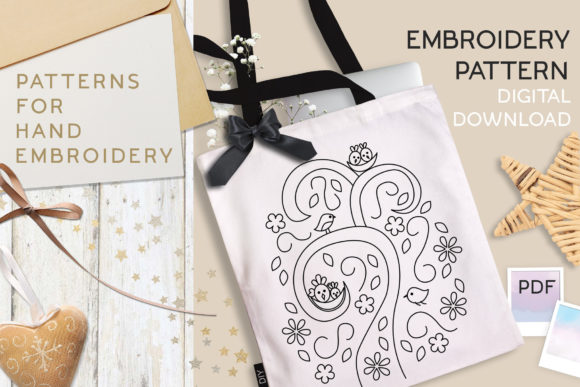
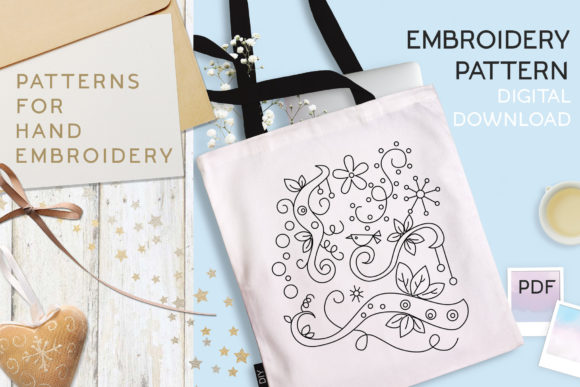
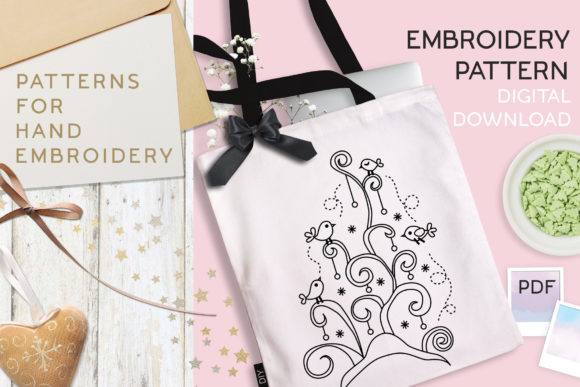
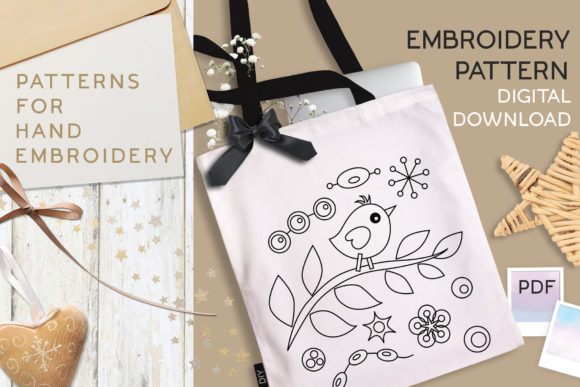
As someone who’s digitized and stitched hundreds of designs for clients—from Etsy sellers launching their first embroidered tote line to boutique owners refreshing seasonal nursery decor—I opened Bird on Branch DIY Embroidery with quiet curiosity. Not hype, not urgency—just the grounded attention you give a pattern before committing thread, time, and reputation to it. Visually, it’s unhurried and intentional: one bird perched lightly on a single branch, clean lines, balanced negative space, and a gentle rhythm between silhouette and detail. It doesn’t shout. It invites. That’s rare in today’s oversaturated digital embroidery landscape—and exactly why this design feels like a quiet asset, not just another download.
Where This Design Naturally Lives
Bird on Branch DIY Embroidery isn’t built for maximalism. It thrives in simplicity-driven contexts: a linen kitchen towel folded neatly on a shelf, the curved front panel of a cotton cap, the corner of a baby blanket where softness and subtlety matter most. Its charm lies in its restraint—no dense fill stitches crowding the bird’s wing, no tiny lettering competing for attention, no layered appliqué that demands extra trimming or alignment. As a hand embroidery pattern, it translates beautifully to running stitch outlines and delicate satin-stitched accents. As a machine embroidery design, its open structure means low stitch density, minimal jump stitches, and forgiving geometry—even over seams or gentle curves.
Real-World Performance Across Product Types
I tested Bird on Branch DIY Embroidery across six physical samples: a heavyweight canvas tote, a midweight organic cotton sweatshirt, a terry cloth kitchen towel, a structured twill cap, a lightweight muslin pillow cover, and a 100% cotton baby receiving blanket. On all, it held integrity—no puckering, no thread breakage, no distortion on stretchy or textured surfaces. The branch’s subtle taper and the bird’s compact shape made it adaptable to small hoop sizes (4” x 4” worked consistently), which is essential when embroidering caps, patches, or narrow apron pockets.
On dark fabric, contrast was crisp with standard 40-weight rayon or polyester thread—no need for underlay-heavy adjustments. On light fabric, it read cleanly without oversaturation. And because it avoids tight corners or micro-details, it stitched reliably on curved cap surfaces without skipping or nesting issues. For handmade shops selling personalized gifts, that consistency builds buyer trust: customers receive what they imagine—not a pixelated or distorted version of the mockup.
What It Adds to Your Handmade Product
- Visual cohesion: Its organic flow complements natural fibers and neutral palettes—ideal for brands rooted in slow craft or mindful living.
- Photography readiness: Clean lines and balanced scale make it easy to style and shoot, whether flat-lay or in-context (e.g., a tote slung over a chair, a pillow propped on a sofa).
- Giftability: Feels personal without being overly literal—perfect for baby showers, teacher appreciation, or “just because” handmade gifts where sentiment outweighs spectacle.
- Brand flexibility: Works equally well as a standalone motif or as part of a curated collection (think: matching towel + pillow + apron sets).
Practical Notes Before You Stitch
Even simple-looking designs deserve deliberate prep—especially when your finished product represents your shop or studio. Here’s what I recommend before stitching Bird on Branch DIY Embroidery for sale or gifting:
- Test on scrap fabric—especially if using textured, stretchy, or dark fabric. Note how stabilizer choice (cutaway vs. tear-away) affects drape and stiffness.
- Check thread color contrast in natural light. A soft sage green bird reads differently on oat linen than on navy denim.
- Review stitch density visually in your embroidery software—if the file includes multiple color stops, confirm no unnecessary pauses or trims interrupt flow.
- Confirm hoop size compatibility with your smallest production hoop. If stitching for caps or patches, verify the design fits comfortably within 3.5” x 3.5” without compression.
- Compare light/dark fabric mockups in your listing photos. Customers rely on those visuals to imagine the design in their own space.
- Inspect small details post-stitch: the tip of the bird’s beak, the end of the branch—ensure no stray threads or loose jumps compromise polish.
- Verify licensing terms on the Creative Fabrica product page. Since this is listed as a Graphics file in the Hand Embroidery Patterns category, confirm whether commercial use of finished items is permitted before listing on Etsy or at craft fairs.
When This Design Earns Its Place
Bird on Branch DIY Embroidery shines not in flash, but in fidelity—to material, to intention, to the quiet dignity of handmade work. It’s the kind of design that elevates a $28 tote bag into a keepsake. That turns a plain sweatshirt into something customers pause to touch and admire. That gives a nursery wall a whisper of life without overwhelming the space. For Etsy sellers building cohesive collections, it’s a reliable anchor. For apparel decorators adding subtle branding to staff uniforms, it’s professional without pretense. For creative entrepreneurs curating printable mockups or digital design assets, it’s versatile, scalable, and stylistically consistent.
It won’t replace a complex floral monogram or a bold typography piece—but it doesn’t try to. Its value is in what it *doesn’t* do: it doesn’t overcomplicate, doesn’t demand excessive stabilization, doesn’t require specialty threads or hoops, and doesn’t risk looking dated next season. In an industry where burnout often comes from chasing complexity, Bird on Branch DIY Embroidery is a reminder that thoughtful restraint is its own kind of craftsmanship.