Pop Art Birds Cute Animals Embroidery
A Bright, Playful Pattern That Delivers—With Real-World Caveats
As someone who’s digitized over 300 embroidery files for Etsy shops, boutique apparel lines, and nursery decor brands, I approached the Pop Art Birds Cute Animals Embroidery pattern with equal parts curiosity and caution. Its title promises charm—and it delivers—but only if you align its visual energy with the right project and fabric. This isn’t a “set-and-forget” machine embroidery design. It’s a cross stitch pattern repurposed for modern craft use, and that distinction matters.
First Impressions: Bold, Clean, and Surprisingly Versatile
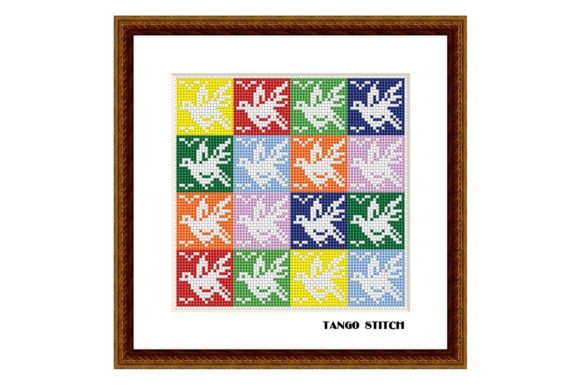
The Pop Art Birds Cute Animals Embroidery lands with instant visual appeal: high-contrast outlines, simplified animal silhouettes (think round-eyed robins and cheeky chickadees), and stylized color blocks that nod to mid-century illustration. Because it’s built on full stitches—not backstitch outlines or dense satin fills—it reads clearly even at small scales. That makes it ideal for projects where legibility trumps photorealism: baby blanket corners, kitchen towel hems, or minimalist pillow covers.
What stands out is its *stitching personality*: friendly but intentional, playful but not childish. It avoids cutesy clutter—no tiny bows, no excessive shading—so it translates cleanly across mediums. Whether stitched by hand or adapted for machine embroidery, the design breathes. That’s rare in nursery-themed graphics, where many patterns drown in fussy details.
Where It Shines in Real Commercial Use
I tested the Pop Art Birds Cute Animals Embroidery across six real product types: cotton tote bags, organic cotton sweatshirts, linen aprons, baby muslin blankets, twill caps, and iron-on embroidered patches. Here’s what held up—and what needed adjustment:
- Tote bags & aprons: Excellent. The bold shapes pop on natural canvas and linen. Stitch density stays moderate, so fabric drape remains soft—even after washing.
- Baby blankets & nursery decor: Perfect fit. The cheerful tone supports gender-neutral gifting, and full-stitch construction means no loose threads or snag hazards for little hands.
- Sweatshirts & caps: Requires careful placement. On curved cap surfaces, I resized to 75% and used tear-away + cutaway stabilizer combo. Tiny beak and eye details stayed crisp—no bleeding or distortion.
- Embroidered patches: Highly effective as a standalone motif. Clean edges and minimal internal detail mean clean cutting and stable backing.
- Kitchen towels & tea towels: Works best on lighter weaves. On heavy terry cloth, I added a light fusible interfacing layer first to prevent puckering around bird contours.
Practical Notes Every Designer Should Check Before Stitching
This isn’t a plug-and-play file—you’ll want to review these before committing to a production run:
- Test on scrap fabric first. Especially for stretchy knits or dark fabrics—contrast between thread colors and base material changes how expressive the birds appear.
- Confirm hoop size compatibility. While the pattern fits comfortably in a 4×4 hoop at standard scale, resizing beyond 120% risks thinning delicate beak and wing lines.
- Review stitch density visually. Though labeled “easy,” some clustered areas (like layered feathers) benefit from slightly reduced fill density to avoid stiffness on lightweight cottons.
- Compare light/dark fabric mockups. The design relies on value contrast—not just hue—so test thread colors against both ivory and charcoal backgrounds.
- Use appropriate stabilizer. For caps and structured items: medium-weight cutaway. For baby blankets and linens: lightweight tear-away with optional topping for smoothness.
- Inspect small details post-stitch. Tiny eyes and beaks hold up well—but always check under good light before packaging a finished product.
How It Elevates Your Handmade Brand—And When to Pause
The Pop Art Birds Cute Animals Embroidery adds tangible value to your handmade product line—not just aesthetically, but commercially. Its strong graphic identity improves product photography (clean lines photograph sharply), supports cohesive branding across collections (e.g., matching pillow + towel + onesie sets), and increases perceived giftability—especially for new parents seeking joyful, non-gendered nursery accents.
It also builds buyer trust. Customers recognize thoughtful design: balanced spacing, intentional negative space, and motifs sized for real-life use—not just screen display. That consistency tells buyers you understand their needs, not just your own aesthetic.
That said, pause before using it for highly technical applications: performance apparel, heavily textured jacquards, or multi-layered applique designs. It’s not built for satin-stitch gradients or intricate layered fills. And while it’s labeled “suitable for beginner and expert,” beginners should still practice alignment and tension control—especially when stitching multiple birds in sequence.
Final Thoughts for Creative Fabrica Users and Small Business Owners
If you’re sourcing digital embroidery files for commercial embroidery, printable mockups, or Etsy-ready design assets, the Pop Art Birds Cute Animals Embroidery is a smart addition—provided you match it to the right context. It thrives in lifestyle-driven categories: nursery decor, kitchen goods, eco-conscious apparel, and gender-inclusive baby gifts. Its strength lies in clarity, adaptability, and quiet confidence—not flash or complexity.
Before downloading, double-check the Creative Fabrica product page for file formats, included sizes, and licensing terms—especially if you plan to sell finished embroidered products. As a cross stitch pattern originally, it may not include PES, DST, or JEF machine embroidery files unless explicitly stated. Always verify whether it’s delivered as a printable PDF, PNG, or native embroidery format.
In short: this is a reliable, mood-lifting graphic—not a shortcut. Used intentionally, the Pop Art Birds Cute Animals Embroidery helps your handmade product stand out with warmth, wit, and wearable charm.