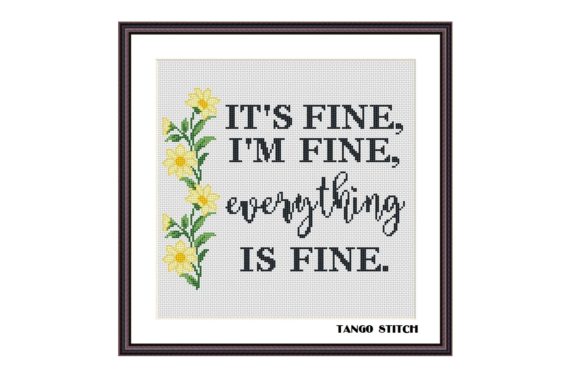
It’s Fine, I’m Fine Positive Cross Stitch
First Impression: Wry, Warm, and Instantly Relatable
As an embroidery designer who’s curated over 200 craft fair booths—from Portland pop-ups to Nashville maker markets—I’ll say this upfront: It’s Fine, I’m Fine Positive Cross Stitch lands with quiet confidence. It’s not loud or glittery, but it’s deeply human. The phrase feels like a gentle inside joke shared between friends over coffee—or during a chaotic Saturday morning at the farmers’ market. It reads as modern, slightly minimalist, and emotionally intelligent—not forced positivity, but resilient, self-aware warmth. That tone translates beautifully into handmade product storytelling, especially for audiences who value authenticity over perfection.
Where It Shines on Craft Fair Products
This design thrives where personality meets practicality. On a natural linen tote bag? Perfect—clean lines read clearly from three feet away, and the balanced rhythm of “It’s fine, I’m fine, everything is fine” creates visual cadence without crowding. As apron embroidery? Ideal for small-shop bakers or herbalists—the phrase adds charm without competing with functional pockets or fabric texture. For tea towel embroidery? Yes—but choose medium-weight cotton (not terry or heavy waffle weave) to keep lettering crisp and avoid thread snagging.
Embroidered patches made from It’s Fine, I’m Fine Positive Cross Stitch are standout craft fair products. They’re lightweight, low-risk impulse buys, and pair effortlessly with denim jackets, backpacks, or gift-wrapped bundles. On small fabric pouches or pillow covers? It works best centered and scaled to ~3.5–4 inches wide—large enough to read comfortably, small enough to preserve stitch integrity. Avoid placing it near seams or curved edges on caps unless you’ve tested hoop placement and stabilizer support first.
Online & Marketplace Performance
For Etsy sellers and digital sellers, this pattern is a quiet powerhouse. Its phrasing is highly searchable (“positive cross stitch,” “funny embroidery quote,” “self-care cross stitch”), and its emotional resonance drives saves and shares. When used in printable mockups—especially styled on neutral backgrounds with soft lighting—it photographs cleanly and consistently. That consistency builds brand trust across listings. As a digital embroidery file, it’s likely compact and efficient—ideal for batch production of small shop products. Just confirm whether it’s offered as a single-color or multi-thread version before scaling for commercial embroidery.
What Makes It Booth-Ready
- Instant readability: No decoding needed—even at booth distance, the phrase registers emotionally before intellectually.
- Repeatable charm: Customers love buying multiples (e.g., matching patch + tea towel + pouch), so it supports bundled offers.
- Brand-flexible: Fits rustic, modern, cottagecore, or wellness-focused shop aesthetics without visual whiplash.
- Booth display strength: Looks intentional beside hand-dyed fabrics or ceramic mugs—not flashy, but memorable in context.
Practical Production Notes Every Designer Should Check
Before cutting fabric or loading your machine, treat It’s Fine, I’m Fine Positive Cross Stitch like any high-performing design asset—test it, don’t assume it. Here’s what I do every time:
- Stitch a sample on scrap fabric that matches your intended product (e.g., unbleached canvas for totes, flour-sack cotton for tea towels).
- Verify thread contrast—especially if using light thread on dark fabric. Subtle phrases fade fast under market tent lighting.
- Review spacing and kerning. Tight lettering can blur on textured surfaces; adjust tracking if needed.
- Confirm hoop size compatibility. If the design exceeds 4×4 inches, plan for re-hooping or larger-capacity machines.
- Inspect stitch density. Dense fills or overlapping letters may cause puckering on lightweight fabrics—add tear-away stabilizer accordingly.
- Create at least one real-world mockup (not just digital). See how it drapes, folds, and catches light in person.
- Compare fabric colors side-by-side—what reads warm and inviting on screen may feel muted in daylight.
- Confirm licensing terms. If selling finished products commercially, ensure the embroidery file permits resale—not just personal use.
Careful-Use Considerations
This isn’t a “set and forget” design. Tiny details—like apostrophes or thin serifs—can vanish on thick fabric or dark thread. Curved cap surfaces compress lettering; test with basting stitches first. On heavily textured tea towels, consider simplifying punctuation or increasing font weight slightly. And while it’s labeled “easy,” don’t overlook how small lettering behaves at 2-inch scale—what’s legible on screen may become indecipherable on a 1.5-inch embroidered patch.
Why It Builds Customer Connection
At its core, It’s Fine, I’m Fine Positive Cross Stitch doesn’t sell stitching—it sells recognition. A customer pauses, smiles, and says, “That’s me.” That micro-moment of seen-ness converts browsers into buyers. It elevates a simple tote bag from utilitarian to meaningful. It turns an apron into a conversation starter. For handmade shops, that emotional lift increases perceived value—and justifies premium pricing. It also reinforces brand consistency: when your booth features this phrase across multiple product types, it signals intentionality, not randomness.
Final Thought for Creative Entrepreneurs
If you’re curating Cross Stitch Patterns or Graphics for your small shop, It’s Fine, I’m Fine Positive Cross Stitch earns its place—not because it’s trendy, but because it’s timeless in its honesty. It fits seamlessly into the growing demand for mindful, expressive, and gently humorous handmade goods. Paired with thoughtful production choices and real-world testing, it becomes more than a design asset. It becomes a quiet ambassador for your craft—welcoming, grounded, and unmistakably human.