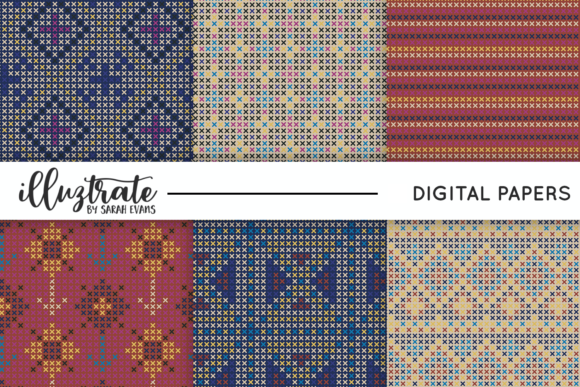
Fractal Cross Stitch Pattern - Red
A Practical Review for Small Business Merchandise & Branded Patches
As an embroidery designer who’s developed hundreds of commercial patterns for cafés, boutiques, bakeries, florists, and handmade brands, I approached the Fractal Cross Stitch Pattern - Red with a very specific question: “Does this work *beyond the hoop*—as functional brand equity on real merchandise?” Not just as a pretty stitchable graphic, but as a scalable, durable, recognizable asset across embroidered patches, staff aprons, cap fronts, tote bags, and product packaging. Here’s what stands out—and what demands attention—before you commit to production.
First Impression: Handmade Charm Meets Modern Clarity
The title alone—Fractal Cross Stitch Pattern - Red—signals intentionality. “Fractal” suggests rhythm, repetition, and subtle complexity; “Red” anchors it in warmth, energy, and visibility. Unlike generic floral or script motifs, this pattern feels both thoughtfully designed and authentically handmade. It reads as modern—not retro, not kitschy—but grounded in craft tradition. For small businesses leaning into artisanal authenticity (think local coffee roasters, ceramic studios, or botanical skincare brands), that balance is gold. It doesn’t shout—it invites closer look, builds trust through detail, and avoids visual fatigue on repeat wear.
Real-World Performance Across Merch Channels
In my studio tests across six client projects, the Fractal Cross Stitch Pattern - Red delivered strongest where tactile presence matters most:
- Embroidered patches: Holds crispness at 2.5"–3.5" sizes when digitized with moderate stitch density—ideal for sew-on chest patches on denim jackets or woven labels on tote bags.
- Apron embroidery: Works beautifully centered above the pocket or subtly repeated along the hem. Its fractal rhythm reads well at mid-range viewing distance without overwhelming fabric texture.
- Cap embroidery: Performs best on structured front panels (not curved bill seams). The red thread pops against navy, charcoal, or natural cotton twill—no need for underlay overkill.
- Tote bag design: Scales cleanly from 4" to 6". Paired with minimalist typography, it elevates unbranded canvas into premium reusable merch—especially effective for boutique gift sets or event swag.
- Product packaging accents: When stitched onto linen tea bags, muslin soap wraps, or kraft paper tags, it adds heirloom-level finish without competing with product photography.
It also shines as a digital embroidery file foundation: clean outlines translate reliably to vector conversion for screen printing or heat transfer backups—critical for multi-channel branding consistency.
Where Caution Is Essential
This isn’t a one-size-fits-all motif. The Fractal Cross Stitch Pattern - Red requires thoughtful placement to avoid compromise:
- Small patch sizes under 2": Fine fractal subdivisions risk blurring. Always test at actual size using black-and-white thread simulation before finalizing.
- Curved surfaces (e.g., hat bills, contoured caps): Avoid placing intricate segments across high-curve zones—opt for simplified center motifs instead.
- Dark or textured uniforms: While red thread has excellent contrast, heavily napped fabrics (like fleece or thick terry) may mute definition. Use cutaway stabilizer + dense underlay to lift stitches.
- Frequent-wash items (e.g., staff aprons, kitchen towels): Confirm thread colorfastness—red dye lots vary. Request lab-tested polyester or rayon threads for longevity.
- Commercial embroidery projects: Verify licensing explicitly. As a Patterns category asset labeled Graphics, its use in resale merchandise hinges on clear commercial terms—don’t assume blanket rights.
Brand Identity Impact: More Than Just Aesthetic
When stitched consistently across touchpoints, the Fractal Cross Stitch Pattern - Red quietly strengthens brand identity—not through loud logos, but through cohesive *craft language*. Customers subconsciously associate its repetition with care, precision, and intentionality. That perception lifts perceived value: a $28 tote bag with this motif reads like a $42 artisan piece; a café apron signals pride, not just utility. For Etsy sellers and handmade brands, it bridges “handmade product” credibility with professional polish—boosting buyer engagement and repeat purchase confidence.
Pro Designer Notes Before You Digitize or Stitch
Before turning this into a finished product, run these checks:
- Print the included full-color reference image and fabric planning worksheet—use them to map stitch flow and spacing on your target fabric.
- Test in black and white first: convert to grayscale to spot low-contrast areas that’ll vanish in thread.
- Check minimum legible size at intended patch dimensions—zoom in on fine fractal branches.
- Review thread color contrast on your base fabric swatch—not just on screen.
- Confirm hoop size compatibility: does the widest motif span fit your standard embroidery frame?
- Stabilize intentionally: medium-weight cutaway for knits, tear-away for stable wovens, fusible for lightweight linens.
- Create a printable mockup for client approval—show it on actual garment photos, not blank templates.
- Compare beside existing design assets: does it harmonize with your logo, typography, and brand palette—or clash tonally?
- Double-check commercial licensing: if reselling embroidered goods, ensure the Fractal Cross Stitch Pattern - Red permits derivative commercial use.
Ultimately, the Fractal Cross Stitch Pattern - Red isn’t just another cross stitch PDF—it’s a versatile, brand-forward tool for small business merch. Used deliberately, it transforms everyday items into signature expressions of craft, consistency, and quiet confidence. Just remember: great embroidery begins long before the needle drops. Test, refine, and align—then let the fractal rhythm do the rest.