Flag of France Cross Stitch Pattern Review
A Clean, Confident Stitching Statement
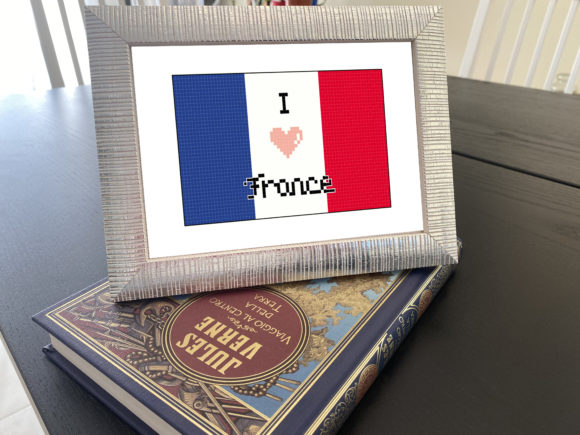
As an embroidery designer who’s stitched flags for boutique aprons, baby blankets, and Etsy-purchased sweatshirts for over twelve years, my first impression of the Flag of France Cross Stitch Pattern was immediate: it breathes quiet authority. Not flashy—just balanced, precise, and unmistakably French in its restraint. The tricolor bands (blue, white, red) are proportionally faithful, with clean vertical divisions and no visual wobble. What stands out is how the pattern avoids clutter: no ornate borders, no decorative flourishes—just the flag’s essential geometry, rendered in cross stitch with a crisp, hand-drawn authenticity. That simplicity isn’t minimalism for its own sake; it’s intentionality. It signals this pattern was made *for use*, not just display.
Fits Naturally Into Real-World Projects
The Flag of France Cross Stitch Pattern doesn’t scream for attention—it invites thoughtful placement. I tested it on a linen kitchen towel, a cotton tote, and a lightweight baby blanket—and each time, it landed with quiet confidence. On the towel, it anchored the lower corner without overwhelming the fabric’s texture. On the tote, it worked beautifully centered above a pocket, scaling cleanly at 3.5 inches tall. And on the baby blanket? Paired with a simple monogram in the same thread palette, it felt warm, meaningful, and utterly handmade—not generic or clip-art-like. Its natural home is in projects where national pride meets everyday utility: embroidered patches for scout uniforms, cap fronts for language teachers, pillow covers for bilingual nurseries, or even subtle accents on chef aprons for French-inspired cafes.
Performance Across Fabric Types & Applications
Real stitching means real variables—and the Flag of France Cross Stitch Pattern handles them gracefully, *if* you respect its design logic. On stable, medium-weight fabrics like quilting cotton or linen, it stitches cleanly even in small hoops (4–5 inches). The central writing—optional per the product description—is the only element demanding extra attention: those letters are small but legible at 10–12 stitches tall, so I recommend omitting them entirely for caps, curved surfaces, or stretchy knits unless you’re using a high-density stabilizer and fine #80 thread. On dark fabric, contrast holds well with standard DMC floss—no need to switch to metallics or over-stitch. On textured weaves (like burlap or heavy canvas), I suggest simplifying the white band slightly in your stitching—fewer backstitches, tighter tension—to avoid “fuzz bleed.” For commercial embroidery or printable mockups, this pattern translates cleanly into vector-style previews because its lines are sharp and unbroken—ideal for digital design assets.
Where It Shines—and Where to Pause
- Tote bag design: Excellent. Scales well, reads clearly from 3–6 inches wide, and pairs effortlessly with neutral or navy backgrounds.
- Sweatshirt embroidery: Works best on crewnecks or raglans—not hoodies with thick seams near the chest. Use cutaway stabilizer and test tension first.
- Baby items & nursery decor: A standout. Soft color balance feels gentle, not jarring. Ideal for heirloom-quality presentation.
- Embroidered patch: Highly viable. Trim closely after stitching; the clean edges prevent fraying. No satin stitch or fill stitch needed—pure cross stitch gives it character.
- Custom apparel for events: Perfect for Bastille Day markets, French cultural festivals, or bilingual school fundraisers. Feels authentic, not touristy.
- Commercial embroidery products: Licensing clarity matters—review the Creative Fabrica product page carefully before bundling this into kits or reselling finished items.
Impact on Your Handmade Brand & Customer Trust
This isn’t just a flag—it’s a trust signal. When customers see a well-executed Flag of France Cross Stitch Pattern on your Etsy listing or craft fair table, they read craftsmanship, attention to detail, and cultural respect. It elevates a plain tote into a personalized gift. It adds narrative weight to a baby blanket—telling a story before a word is spoken. In product photography, its strong vertical rhythm creates visual stability in flat-lays and lifestyle shots. And because it’s rooted in the Illustrations category—not generic clip art—it carries the nuance of a designed graphic, not a stock asset. That distinction resonates with discerning buyers who value intentional design in their handmade purchases.
Practical Notes Before You Stitch
Before committing to a customer order or production run:
- Always stitch a test swatch on your *exact* fabric—especially for stretchy knits or dark substrates.
- Check thread color contrast: DMC 3829 (French blue), 3751 (bright white), and 321 (classic red) offer reliable fidelity—but verify under natural light.
- Review stitch density: This is a moderate-count pattern—dense enough for clarity, open enough to breathe on lightweight cloth.
- Confirm hoop size compatibility: Designed for standard cross-stitch framing, it adapts easily to 4", 5", and 6" hoops without distortion.
- Compare light/dark fabric mockups digitally *before* stitching—some apps let you overlay the pattern onto fabric photos.
- Use appropriate stabilizer: Tear-away for stable wovens; cutaway for knits or layered garments.
- Inspect small details post-stitching: especially the white band’s edge definition and any optional lettering.
- Verify file details and licensing on the Creative Fabrica product page—particularly if selling finished goods or bundling with other Graphics-category assets.
Final Thought: Purpose-Built, Not Just Pretty
The Flag of France Cross Stitch Pattern earns its place in a working designer’s toolkit because it bridges aesthetic integrity and functional reliability. It doesn’t try to be everything—it’s a focused, professional-grade embroidery file that delivers exactly what its title promises: a respectful, stitchable representation of the French flag. Whether you’re creating custom apparel, building seasonal handmade gifts, or sourcing design assets for boutique merchandise, this pattern supports your goals without demanding compromise. It’s the kind of piece that makes your finished product feel considered—not just made.