Dear Heart, Why Him Funny Cross Stitch
A Craft Fair Designer’s First Look: Bold, Witty, and Instantly Relatable
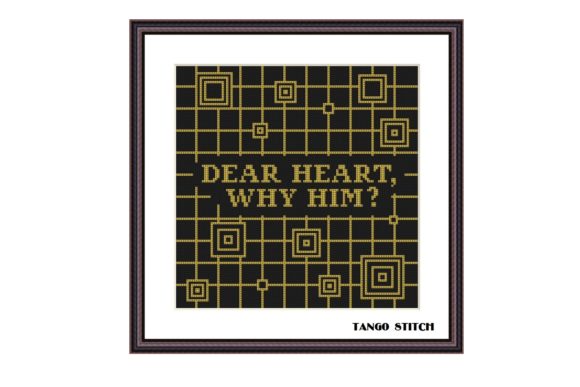
Walking the aisles of a craft fair—or setting up my own booth—I know one thing for certain: customers don’t pause for vague charm. They stop for personality. Dear Heart, Why Him Funny Cross Stitch delivers that in spades. At first glance, it reads as vintage gold with a wink—softly romantic but unapologetically humorous. It’s not farmhouse-cute or minimalist-quiet. It’s conversational, confident, and just a little cheeky—exactly the kind of tone that sparks smiles, photo ops, and impulse buys from shoppers browsing handmade goods.
Where This Design Shines on Real Craft Fair Products
This pattern thrives where personality meets utility. On a natural linen tea towel? Perfect—its gold vintage aesthetic reads clearly against texture without competing. As an embroidered patch sewn onto a denim tote bag? Strong visual anchor—small enough to accent, bold enough to define. For aprons sold at kitchen-themed markets or bridal showers? It adds warmth and wit without veering into kitsch. And on small fabric pouches or pillow covers? It holds its charm even at 3–4 inches wide—no tiny lettering or fragile details to blur or break.
As a machine embroidery design or digital embroidery file, Dear Heart, Why Him Funny Cross Stitch works beautifully across formats—but only if treated with intention. Its “full stitches only” construction means clean, predictable results on stable fabrics like cotton twill, quilting weight linen, or midweight canvas. That simplicity also makes it ideal for batch production: consistent stitch density, no backstitching complications, and minimal thread color shifts.
What Customers Notice—And What Makes Them Reach Out
In a crowded booth, Dear Heart, Why Him Funny Cross Stitch stands out because it *speaks*. Not literally—but emotionally. Shoppers pause, read it aloud, laugh, tag a friend. That moment of connection is gold for handmade product sellers. It transforms a simple embroidered item into a conversation starter—and that’s how tote bags become Instagram stories and tea towels become wedding favors.
It photographs exceptionally well for Etsy listings and printable mockups. The gold vintage styling gives rich contrast against neutral backgrounds, and the balanced layout (no extreme height-to-width ratio) scales cleanly across product thumbnails, social posts, and printed booth signage. Unlike overly intricate Cross Stitch Patterns, this one doesn’t vanish in small previews—it retains legibility and mood even at thumbnail size.
Practical Production Notes Every Embroidery Business Owner Should Know
Before cutting your first stabilizer sheet, test Dear Heart, Why Him Funny Cross Stitch on scrap fabric matching your intended product—especially for textured towels or curved cap surfaces. Gold thread on dark fabric? Check contrast early: some metallics dull on charcoal or navy unless paired with a crisp white underlay. On caps or curved items, confirm hoop size compatibility—this design’s proportions favor medium hoops (5"–7"), not micro-embroidery setups.
Stitch density is moderate—not sparse, not overwhelming—so standard cutaway or tear-away stabilizer works well for most cotton and linen blends. Avoid heavy fusible interfacing on lightweight tea towels; it stiffens drape and muffles the vintage softness this design evokes. And always inspect spacing between words: tight kerning can blur on thick fabric or low-thread-count weaves. If selling finished products commercially, verify licensing terms—this is a Graphics file meant for adaptation, but commercial embroidery rights must be confirmed before mass-producing embroidered patches or wholesale pillow covers.
Booth Strategy: How to Maximize Impact at Markets & Fairs
I never launch Dear Heart, Why Him Funny Cross Stitch as a standalone pattern print. Instead, I build around it: one embroidered market bag hanging front-and-center, a folded tea towel with the design centered on the lower third, and three small pouches in varying sizes (all featuring the same motif) fanned out beside a handwritten sign: “Because love is funny. And so are these.” That grouping shows versatility while reinforcing brand consistency—every item feels part of the same thoughtful, handcrafted world.
For Etsy sellers and small shop owners, pair this design with complementary assets: a printable mockup pack (tote + towel + pouch), a ready-to-print care label (“Hand-stitched with humor & gold thread”), and a short video showing the cross stitch in progress—beginner-friendly, full-stitch only, no half-stitches to trip over. That builds trust and reduces support questions.
Careful-Use Considerations: Where Clarity Meets Craft
- Small lettering: While legible at 3", avoid shrinking below 2.5"—the “why him” phrasing relies on rhythm, not just shape.
- Fabric texture: Highly napped terry cloth or bouclé yarn-dyed linens may soften edges—test before committing to 50 tea towel orders.
- Curved surfaces: Caps and mugs require digitized reflow—don’t assume the original cross stitch pattern translates directly to machine embroidery without adjustment.
- Dark fabric: Metallic gold thread loses luminosity on black or deep burgundy unless backed with white stabilizer or underlay stitching.
- Batch consistency: Because it’s beginner-friendly, multiple makers can produce it reliably—but only if using the same thread brand and fabric prep method. Document your process for team-based small shop production.
Final Thought: A Design That Sells Itself—When Handled Right
Dear Heart, Why Him Funny Cross Stitch isn’t just another Cross Stitch Pattern. It’s a micro-branding tool—a ready-made voice for your handmade product line. It elevates a plain tote into a statement piece, turns a kitchen gift into a keepsake, and gives your craft fair booth instant warmth and wit. But its strength lies in execution: choose the right fabric, honor the gold vintage spirit in thread and placement, and always—always—make one real mockup before the first customer arrives. Because in handmade markets, authenticity isn’t just felt—it’s stitched, shown, and shared.