Cross Stitch Alphabet: A Smart Choice for Small Business Branding
First Impression: Handmade Charm Meets Professional Clarity
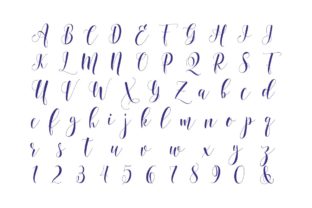
As an embroidery designer who’s developed hundreds of commercial patterns for cafes, florists, bakeries, and indie studios, my first impression of Cross Stitch Alphabet is immediate and positive: it reads as both authentically handmade and cleanly functional. The title signals approachability and craft—no sterile vector fonts or over-polished gradients here—but the description (“Easy to follow,” “app. 52 stitches tall,” “9.4cm high on 14 ct fabric”) confirms thoughtful construction. It doesn’t scream “vintage rustic” or “playful cartoon”; instead, it lands in that sweet spot between classic cross stitch tradition and modern small business utility—friendly enough for a pet brand’s tote bag, structured enough for a boutique’s staff apron.
Real-World Performance Across Merchandise Types
Cross Stitch Alphabet shines where many decorative alphabets falter: in context. On an embroidered patch for a local coffee roaster? Yes—it adds tactile warmth without sacrificing legibility. As chest logo accents on custom apparel for a floral studio? Absolutely—the even height and consistent spacing hold up beautifully at 3–4 inches. For cap embroidery, I recommend using only 2–3 initials (e.g., “LIL” for Lilac & Co.) to preserve clarity; full names risk crowding on curved fronts. On tote bags and work shirts, the pattern scales naturally—its rhythm supports repetition (think “EST. 2022” stitched beside a logo) and pairs well with simple icons or monograms.
For apron embroidery, especially in food or craft businesses, Cross Stitch Alphabet reinforces authenticity. Customers notice—and trust—the intentionality behind hand-stitched branding. Likewise, when used on product packaging accents (like sewn-on tags for handmade soap or candles), it elevates perceived value far beyond printed labels. Etsy sellers report higher engagement when their shop banner, printable mockup, and physical patches all share this cohesive, artisanal voice.
Where to Use With Intention—Not Assumption
Like any strong cross stitch pattern, Cross Stitch Alphabet has boundaries. Its 52-stitch capital height works reliably on 14-count fabric at ~3.5 inches—but shrink that down to a 1.5-inch embroidered patch, and letter spacing tightens, outlines soften, and stitch density increases. That means: avoid full words on tiny cap backs or curved surfaces like visors unless you’ve tested the digital embroidery file at scale. Dark uniforms demand high-contrast thread colors—test black letters on navy twill with white or cream thread, not off-white. And always inspect spacing before digitizing: uneven gaps between letters can undermine brand identity faster than mismatched fonts.
Fabric texture matters too. On heavy canvas totes or textured linen aprons, the design reads clearly. On stretchy knits or delicate chambray, stabilizer choice becomes critical—you’ll need cutaway or tear-away support to prevent puckering, especially around dense letter interiors. Also, remember: frequent washing affects long-term stitch integrity. Recommend clients use quality threads and reinforce high-wear zones (like tote bag handles or apron pockets) during layout.
How It Shapes Brand Identity and Customer Perception
Small business merch isn’t just about visibility—it’s about resonance. Cross Stitch Alphabet subtly tells customers: *We value craft, care, and continuity.* That message builds trust more effectively than generic sans-serifs. A florist using it on staff caps and customer gift tags creates visual consistency across touchpoints—strengthening recognition without shouting. A bakery applying it to aprons and reusable bags signals authenticity in an era of mass production. Even digitally, when used in printable mockups or social media assets, it anchors a brand’s visual language in something tangible and human-made.
Importantly, it avoids looking “cute” or “childlike”—a common pitfall with alphabet patterns. Its proportions feel balanced, its lines deliberate. That balance translates directly to perceived professionalism. When paired with complementary design assets (a simple icon, consistent color palette), Cross Stitch Alphabet becomes part of a scalable system—not just a one-off graphic.
Practical Designer Notes Before You Embroider
- Test in black and white first. Cross-stitch contrast relies on tone, not hue—verify readability before committing to thread colors.
- Check small-patch viability. Resize your digital embroidery file to 1.75" height and stitch it on scrap fabric—look for legible serifs and open counters (like the center of “A” or “O”).
- Review thread color contrast. Especially on dark or textured fabrics—avoid near-matching tones (e.g., charcoal on black).
- Inspect letter spacing and kerning. Tight fits may require manual adjustment in your embroidery software before production.
- Confirm hoop size and fabric prep. At ~3.5 inches tall, this pattern likely fits standard 4x4 or 5x7 hoops—but verify based on your machine and layout.
- Test on real fabric. Linen, cotton twill, and canvas behave differently—always run a sample before batch production.
- Use proper stabilizer. Medium-weight cutaway prevents distortion, especially for dense areas like “M” or “W.”
- Create a client mockup early. Show how Cross Stitch Alphabet looks stitched on their actual garment or patch substrate—not just on screen.
- Compare alongside other design assets. Does it harmonize with your logo, icon set, and typography hierarchy?
- Confirm commercial licensing. Since this is listed under Cross Stitch Patterns and Graphics, verify usage rights apply to small business merch, embroidered patches, and resale items before ordering.
In short: Cross Stitch Alphabet isn’t just another embroidery file—it’s a versatile, brand-forward tool for small business owners who understand that how you say it matters as much as what you say. Whether you’re launching your first line of branded totes or refreshing staff uniforms for a growing creative studio, this pattern delivers handmade integrity with commercial reliability.