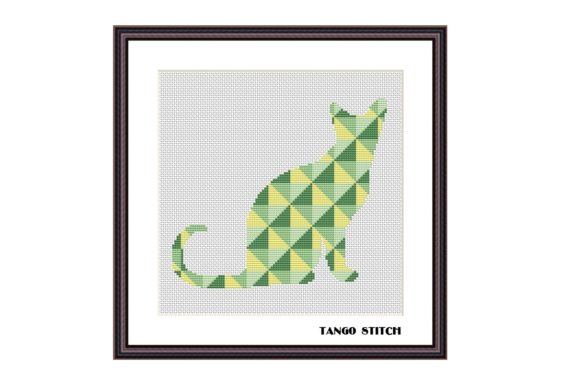
Cat Geometric Cross Stitch Pattern
A Designer’s First Look: Charm, Clarity, and Quiet Confidence
As an embroidery designer who’s developed over 200 patterns for gift shops, Etsy sellers, and baby product studios, I opened the Cat Geometric Cross Stitch Pattern expecting charm—and found something more: quiet confidence. It’s not fussy or overly detailed, yet it carries unmistakable warmth. The cat is stylized with clean angles and balanced proportions—modern enough for a minimalist wedding keepsake, sweet enough for a nursery pillow cover, and grounded enough to feel handmade without looking “craft-fair-cute.” There’s no whimsy overload, no forced cuteness. Just a gentle, geometric feline that invites connection—not distraction. Its emotional appeal sits squarely in the “calmly joyful” zone: perfect for customers seeking personalized gifts that feel intentional, not incidental.
Where This Pattern Truly Shines in Real-World Gifting
The Cat Geometric Cross Stitch Pattern is remarkably versatile across high-demand personalized categories. For baby embroidery, it reads as tender and timeless—ideal for a receiving blanket corner, a onesie pocket (when adapted), or a framed sampler gifted at a baby shower. Wedding gift designers will appreciate how easily it translates to linen napkins, heirloom towel sets, or monogrammed pillow covers for the couple’s first home. As a small shop product, it adds handmade authenticity to curated gift boxes—especially when paired with organic cotton towels or unbleached canvas tote bags. Etsy sellers can feature it in listings for “modern nursery decor” or “minimalist wedding embroidery,” and its clean lines photograph beautifully against neutral backdrops. Even craft fair vendors report strong engagement when stitching a live preview on a pillow cover—it’s approachable enough for beginners to start mid-booth, yet refined enough to signal quality.
Smart Pairings for Maximum Gift Impact
- Embroidered towel: Works exceptionally well on medium-weight terry or waffle weave—just avoid ultra-thick loops that obscure stitch definition.
- Pillow cover: Ideal for linen, cotton-linen blends, or heavyweight quilting cotton—holds shape and lets geometry read clearly.
- Blanket embroidery: Best placed near a corner or border on knit or woven baby blankets; avoids distortion from stretchy fabrics.
- Custom tote bag: Stitches cleanly on canvas or duck cloth; scales well without losing clarity.
- Apron or kitchen linens: Adds quiet personality without competing with functional design.
Where to Use Thoughtful Caution
While the Cat Geometric Cross Stitch Pattern is beginner-friendly and forgiving, thoughtful placement matters. Avoid using it on stretchy baby clothes unless stabilized heavily—the full-stitch-only construction holds up well, but fabric movement can distort alignment. On dark fabric, confirm thread color contrast early: light grays or creams may vanish unless paired with ecru or off-white DMC. For curved surfaces like mugs or rounded pillow forms, test on a mockup first—the flat geometry doesn’t wrap intuitively. And while it’s labeled “easy,” don’t assume it’s ideal for small lettering zones or micro-details: this pattern shines in mid-to-large scale (4–8 inches wide). If you’re adapting it for a machine embroidery design, remember this is a digital embroidery file built for hand stitching—digitizing requires redrawing for satin stitch flow and underlay.
Why Customers Trust—and Keep Coming Back To—This Style
Gift buyers don’t just buy a cat. They buy a feeling: softness, continuity, quiet love. The Cat Geometric Cross Stitch Pattern delivers that through perceived handmade quality. Its limited detail (no fractional stitches, no backstitch outlines) means fewer errors, cleaner finishes, and consistent results—even for part-time stitchers running small shop product lines. That consistency builds customer trust: when your Etsy listing promises “hand-embroidered with care,” this pattern helps you deliver it, every time. It also elevates product photography—clean lines pop on camera, making social previews and printable mockups instantly shareable. And because it feels both modern and classic, it avoids seasonal fatigue. You won’t need to retire it after baby season or wedding spring—you’ll rotate it year-round.
Practical Notes Every Maker Should Test Before Production
Before stitching your first customer-ready piece, run these quick checks:
- Test on scrap fabric matching your final product (e.g., terry for towels, linen for pillow covers).
- Confirm thread color contrast—especially if using variegated or tonal threads that may mute the geometry.
- Review stitch density: Though it uses only full stitches, tight spacing can cause puckering on lightweight weaves—adjust hoop tension accordingly.
- Use appropriate stabilizer: Light tear-away works for stable fabrics; cut-away helps with knits or textured weaves.
- Compare light and dark fabric mockups side-by-side—some thread palettes shift dramatically.
- Check small details post-stitch: corners and ear points should remain crisp—trim stray threads carefully.
- Verify commercial licensing before selling finished products—this digital embroidery file may have usage terms specific to handmade vs. wholesale distribution.
Final Thought: A Pattern That Serves the Gift, Not Just the Stitcher
In a market flooded with busy, trend-driven designs, the Cat Geometric Cross Stitch Pattern stands out by serving the gift first. It doesn’t shout. It settles in—on a baby’s blanket, a bride’s handkerchief, a friend’s favorite tote. That quiet intentionality is what makes it a reliable workhorse for cross stitch patterns in the Graphics category and a smart long-term asset for any maker building a signature style. Whether you're an Etsy seller curating heartfelt digital embroidery files or a boutique owner sourcing small shop products, this pattern earns its place—not because it’s flashy, but because it’s faithful: to craft, to clarity, and to the quiet joy of giving something truly made.